Title: Expanding frontiers in scalable deposition technologies for next-generation mixed anion thin films
Research proposal No: 1.1.1.9/LZP/1/24/011
Duration: 01.07.2025.-30.06.2028.
Project Leader: Dr.phys. Mārtiņš Zubkins, Institute of Solid State Physics University of Latvia (ISSP UL)
Total budget: 184 140 EUR
European Regional Development Fund (ERDF) funding: 156 519 EUR
State budget funding: 18 414 EUR
ISSP UL budget: 9 207 EUR
Project description:
Mixed-anion thin films possess unique structural and functional properties, making them promising materials for various innovative applications such as smart windows, photocatalysis, and energy technologies. The aim of this project is to develop scalable deposition technologies for fabricating next generation mixed-anion thin films with tailored functional properties. By creating sustainable, scalable coating methods, the project supports Latvia’s Smart Specialisation Strategy (RIS3) priorities – 3. Smart materials, technologies and engineering systems; and 4. Smart energy.
The planned activities include: (i) deposition of mixed-anion thin films at lab scale using magnetron sputtering, including nanostructuring and optimisation of deposition parameters; (ii) characterisation of structure, chemical composition, and functional properties using advanced techniques to provide feedback for synthesis; and (iii) scaling up the deposition process to produce high-quality, uniform coatings over large areas.
Expected outcomes include the deposition of yttrium oxyhydride (YHO) and transition metal oxynitride (e.g., TaON, Ti3O3N2, Zr3O3N2) thin films with improved properties, detailed understanding of structure–composition–property relationships, and the development of a scalable deposition protocol suitable for industrial applications. The project will expand the range of thin films with novel functionalities, advance large-area coating technologies, and contribute to the postdoctoral researcher’s professional growth by enhancing skills, knowledge, and research capacity, thereby fostering scientific excellence. Four scientific papers will be published in journals indexed in Web of Science and Scopus databases, and a new thin film deposition technology will be developed and patented. The research will be conducted at the Thin Films Laboratory of the Institute of Solid State Physics, University of Latvia (ISSP UL), a leading institution in the fields of materials science and solid-state physics.
PROJECT PROGRESS
Time period: 01.04.2026. - 30.06.2026.
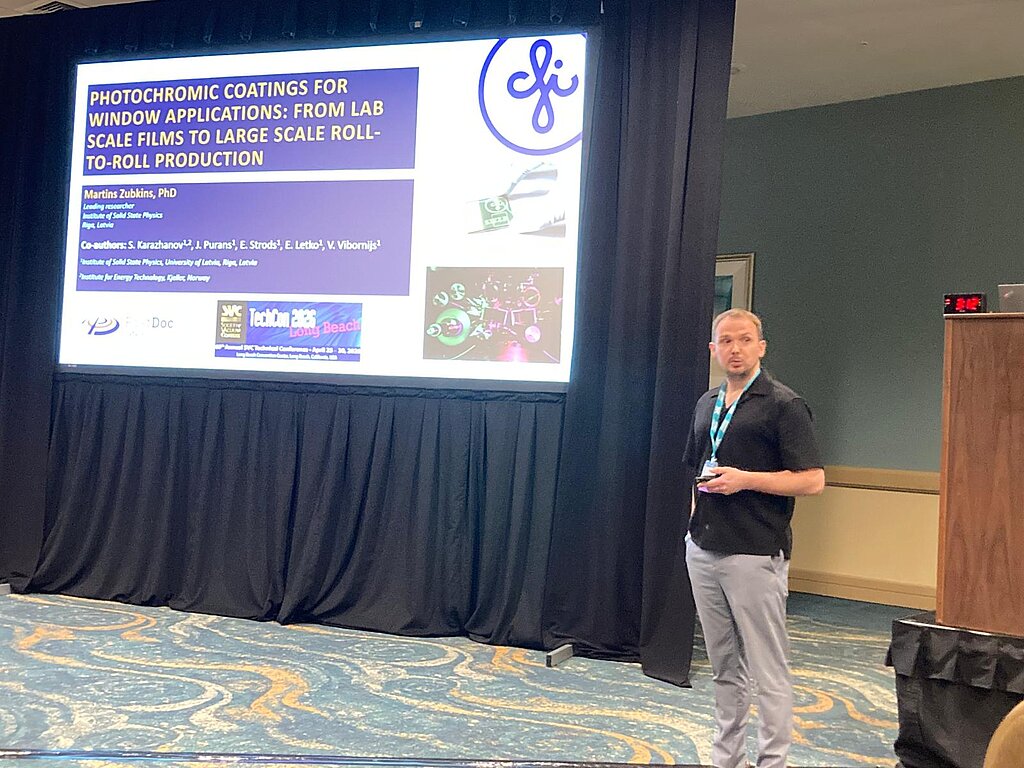
From 25 to 30 April, project researcher Martins Zubkins participated in SVC TechCon 2026 in Long Beach, USA, an international conference on vacuum coating and thin film technologies. He delivered an invited talk and an oral presentation on photochromic thin film coatings and the upscaling of their deposition technologies from laboratory-scale research to large-area coatings. Particular attention was given to photochromic yttrium oxyhydride (YHO) coatings and their potential application in smart window technologies.
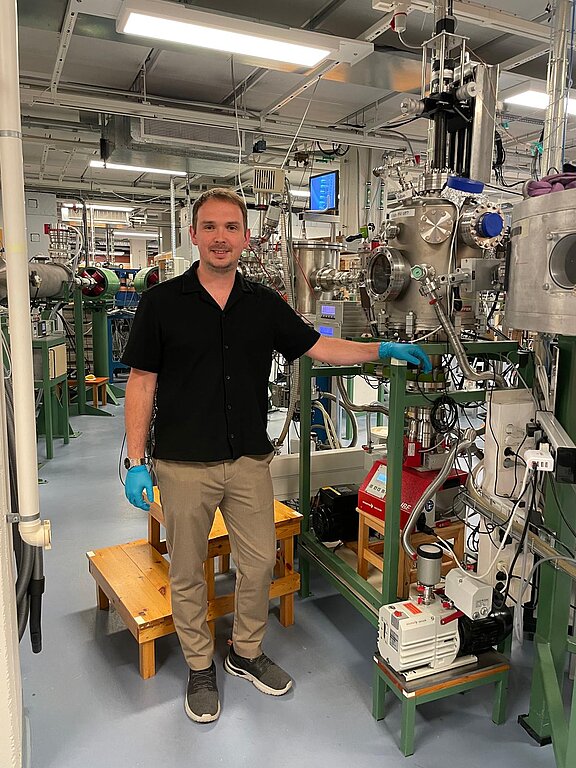
From 3 to 5 June, M. Zubkins visited Uppsala University, Sweden, where thin film composition was investigated in collaboration with university researchers using the ToF-ERDA technique. The visit also included discussions on ongoing research into photochromic materials, future collaboration, and the development of joint research activities.
On 18–19 June, M. Zubkins gave a lecture entitled “Controlling Photochromism in Rare-Earth Oxyhydride Thin Films via Magnetron Sputtering and Upscaling” at the SWEB Summer School on Functional Coatings and X-Chromic Materials, held at the Institute of Solid State Physics, University of Latvia in Riga. The lecture focused on controlling the photochromic properties of rare-earth oxyhydride thin films and developing scalable deposition technologies for larger-area coatings.
Time period: 01.01.2026. – 31.03.2026.
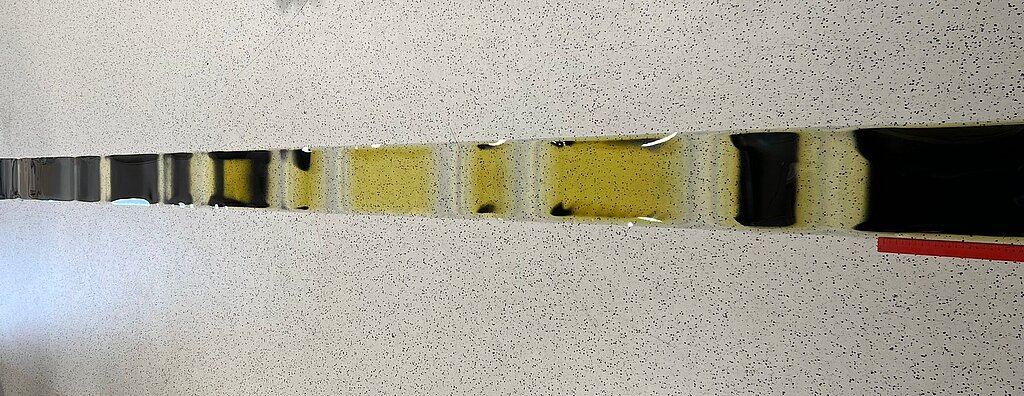
During the development process, the first test samples of photochromic yttrium oxyhydride (YHO) thin films were deposited using roll-to-roll (R2R) technology in the RC-200-1 coating system. During deposition, the working pressure and gas atmosphere composition were varied in order to optimise the coating structure, optical properties, and photochromic activity.
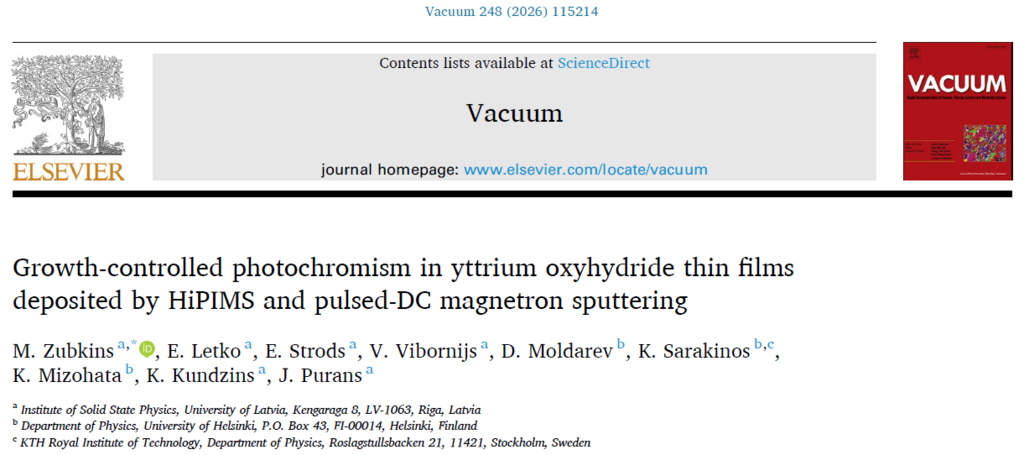
On 24 February 2026, the scientific article “Growth-controlled photochromism in yttrium oxyhydride thin films deposited by HiPIMS and pulsed-DC magnetron sputtering” was published in the journal Vacuum (Vacuum 248 (2026) 115214; see figure). The publication was prepared in collaboration with the University of Helsinki (Finland) and the KTH Royal Institute of Technology (Sweden). The study includes data obtained with support from the PostDoc mobility activity.
Time period: 01.10.2025. – 31.12.2025.
Within the framework of the project, new yttrium oxyhydride (YHO) thin films were fabricated at elevated temperature (200 °C) on amorphous silicon dioxide substrates. During the fabrication process, several parameters were varied: (i) the hydrogen-to-argon gas flow ratio and (ii) the deposition duration, which determines the resulting film thickness. The fabricated films were characterised in terms of their structural and optical properties, including evaluation of their photochromic behaviour.
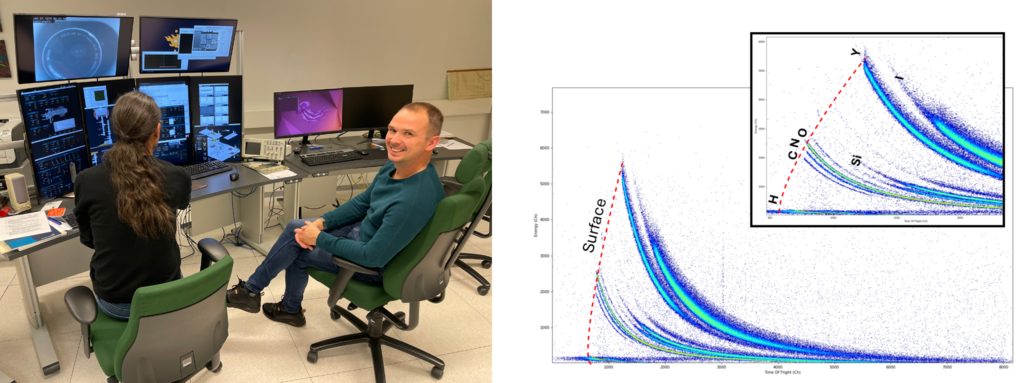
From 29 to 31 October, Mārtiņš Zubkins visited the Accelerator Laboratory of the University of Helsinki (Finland), where he performed chemical composition analysis of YHO samples using the ToF-E ERDA method and acquired skills in data processing. During the visit, he delivered a presentation introducing his research activities and the work carried out at the Institute of Solid State Physics, University of Latvia (ISSP UL), and discussed future collaboration opportunities with the laboratory staff.
From 11 to 12 December, M. Zubkins visited the Thin Film Technology Laboratory at the University of Tartu. During the two-day visit, meetings were held with the laboratory staff to discuss the results of high-resolution X-ray diffraction (HR-XRD) measurements performed on photochromic YHO films deposited on yttria-stabilised zirconia (YSZ) substrates with different crystallographic orientations. The analysis of the obtained results provided important insights into the film structure, texture, and epitaxial quality.
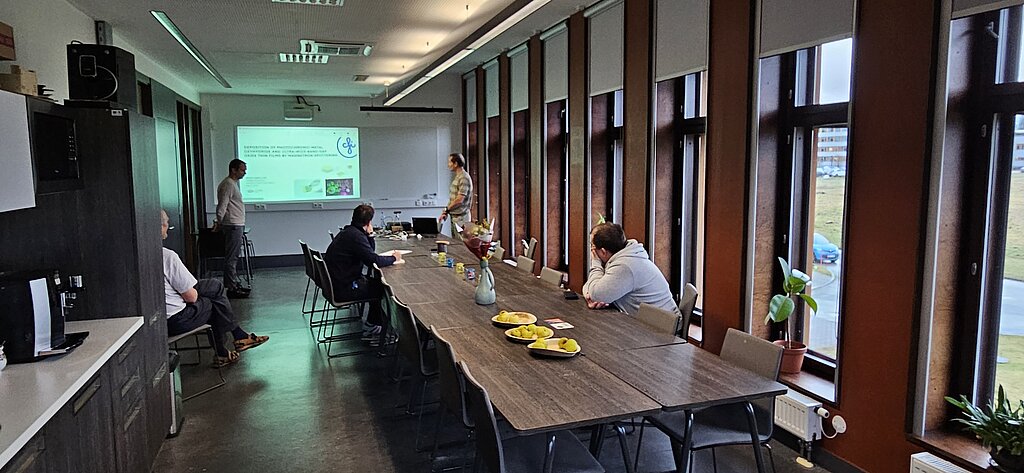
During the visit, an agreement was reached to prepare a joint scientific publication dedicated to an in-depth investigation of the structure and properties of YHO films deposited on YSZ substrates. In addition, a seminar presentation entitled “Deposition of Photochromic Metal Oxyhydride and Ultra-Wide Band Gap Oxide Thin Films by Magnetron Sputtering” was delivered during the laboratory seminar.
Time period: 01.07.2025. - 30.09.2025.
During the project implementation, yttrium oxyhydride (YHO) thin film samples were prepared on various substrates using the magnetron sputtering method. Glass, single-crystalline yttria-stabilised zirconia, silicon, and sapphire (c-plane Al2O3) substrates were used in the studies. The samples were produced to determine their chemical composition, structure, vibrational spectra, and photochromic effect. A solar simulator was used to characterise the photochromic effect by analysing the colouring and bleaching dynamics of the films.
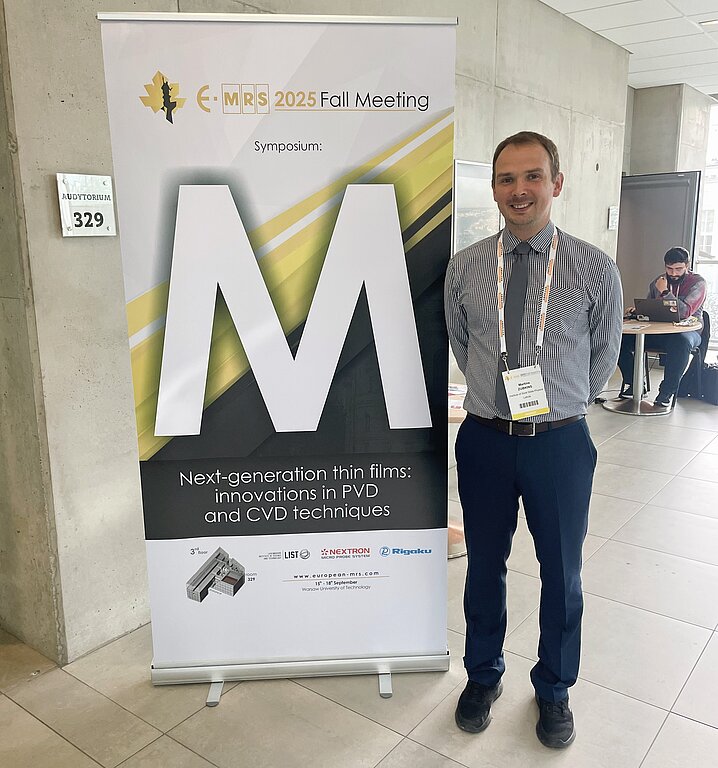
A presentation titled “Role of hydrogen dynamics and deposition conditions in photochromic YHO/MoO3 bilayer films” was delivered at the international conference E-MRS Fall 2025 (15–18 September), Warsaw, Poland. Participation in the conference promoted the visibility of LU CFI research, facilitated new collaborations (for example, with the Helsinki Accelerator Laboratory), and provided up-to-date insights into the development trends of functional coatings, directly supporting the project objectives.
In addition, participation in the RAC International Summer School (24–31 August) on diffraction and spectroscopy methods in materials science (Tallinn, Estonia) contributed to the expansion of international contacts, and the acquired skills will be applicable in the project implementation.