

Project title: “Development of the Scientific Infrastructure of the University of Latvia in RIS3 Areas”
Project contract number: 1.1.1.2/1/25/I/006
Project cooperation partners: Institute of Solid State Physics, University of Latvia; Institute of Mathematics and Computer Science, University of Latvia.
Project implementation period: 56 months (from April 8, 2025 to December 31, 2029)
Total project funding: EUR 10,721,112, including EUR 2,100,961 for the Institute of Solid State Physics, University of Latvia, and EUR 953,539 for the Institute of Mathematics and Computer Science, University of Latvia.
Project manager: Marta Meženiece, Project Manager at the Science Department of the University of Latvia
Project objective:
The aim of the project is to develop and modernize the research infrastructure of the University of Latvia (UL), the UL Institute of Solid State Physics (ISSP UL), and the UL Institute of Mathematics and Computer Science (UL IMCS), strengthening scientific excellence, international cooperation, and innovation, as well as promoting the establishment of centers of excellence in the areas defined by Latvia’s Smart Specialisation Strategy (RIS3).
As a result of the project investments, contributions will be made to the development of all five RIS3 areas:
Knowledge-intensive bioeconomy (UL);
Biomedicine, medical technologies, pharmacy (UL and ISSP UL);
Photonics and smart materials, technologies and engineering systems (UL and ISSP UL);
Smart energy and mobility (UL and ISSP UL);
Information and communication technologies (UL, ISSP UL and UL IMCS).
Main project results:
Research infrastructure at the University of Latvia, the Institute of Solid State Physics, University of Latvia, and the University of Latvia Institute of Mathematics and Computer Science will be modernized by replacing outdated equipment with new systems, improving the functionality and capabilities of existing equipment, and acquiring new equipment to support the development of new research directions.
The modernization of research infrastructure will be a strategically significant step in strengthening the research capacity and competitiveness of UL, ISSP UL, and UL IMCS at both national and international levels, contributing to the enhancement of Latvia’s innovation system capacity in line with the RIS3 strategy.
PROJECT PROGRESS
APRIL - JULY 2026
During the period from April to July 2026, the project continued the development of scientific infrastructure with the acquisition and setup of the following equipment:
April: Delivery of the Luminescence Spectrometer from Monospektra.
May: Procurement and installation of the VERO-ES-HV Interferometric Atomic Force Microscope (AFM).
Reporting Period: Delivery of the Direct-Write Lithography System from Heidelberg Instruments.
Reporting Period: Acquisition of Wildom equipment for sample transfer to a Scanning Electron Microscope under an inert atmosphere.
The newly acquired infrastructure strengthens research capabilities and provides advanced technological resources to support the RIS3 specialization areas.
APRIL 2026
Progress in Scientific Infrastructure Modernization: First Deliveries and Installed Solutions
As we continue to implement the University of Latvia’s scientific infrastructure development project, April marks a significant milestone in the delivery and installation of key equipment. Our goal is to create a modern, innovation-driven research environment that serves the needs of both academia and industry.
Key Achievements to Date:
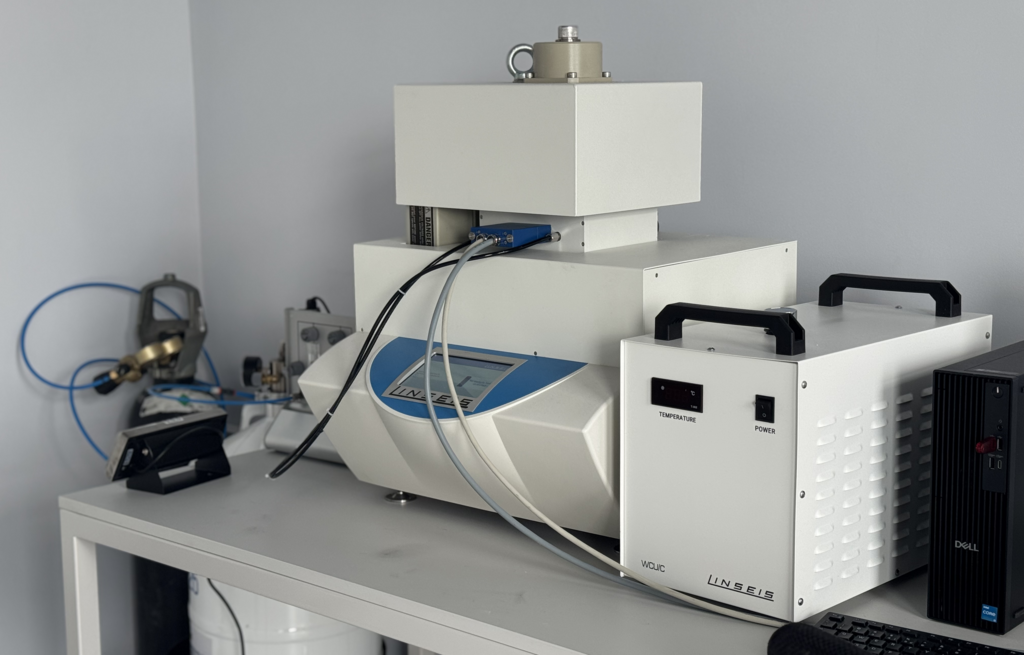
Advanced Measurement Systems Installed: The integrated Keithley 4200A-SCS parameter analyzer and the Linseis Hall Effect measurement system are already operational in our labs.
Procurement Contracts Finalized: We are in the final stages of receiving the Oxford VERO atomic force microscope and the Heidelberg DWL66 lithography system, which will significantly expand our capabilities in nanotechnology.
Infrastructure Adaptation: Parallel to the procurement process, intensive engineering work is ongoing to ensure necessary ventilation, vacuum systems, and gas connections for specialized laboratory environments.
This modernization wave is a vital investment in ISSP UL’s growth as a leading RIS3 research center, fostering the creation of new technologies and the effective transfer of knowledge.
JANUARY 2026
A New Era at ISSP UL: Large-Scale Scientific Infrastructure Modernization Underway
The year 2026 has begun with a major push to strengthen the research foundation of the Institute of Solid State Physics, University of Latvia (ISSP UL). Within the framework of project No. 1.1.1.2/1/25/I/006, we have launched the development of technical specifications and procurement processes to equip our laboratories with world-class instrumentation.
At this stage, the primary focus is on Latvia’s RIS3 priority areas: photonics and smart materials. Preparations are already underway to adapt laboratory spaces for incoming equipment, including high-performance computing cluster upgrades and precision lithography systems. These investments, exceeding 2 million euros, will empower ISSP UL scientists to pursue even more ambitious projects and enhance the international competitiveness of Latvian science.