
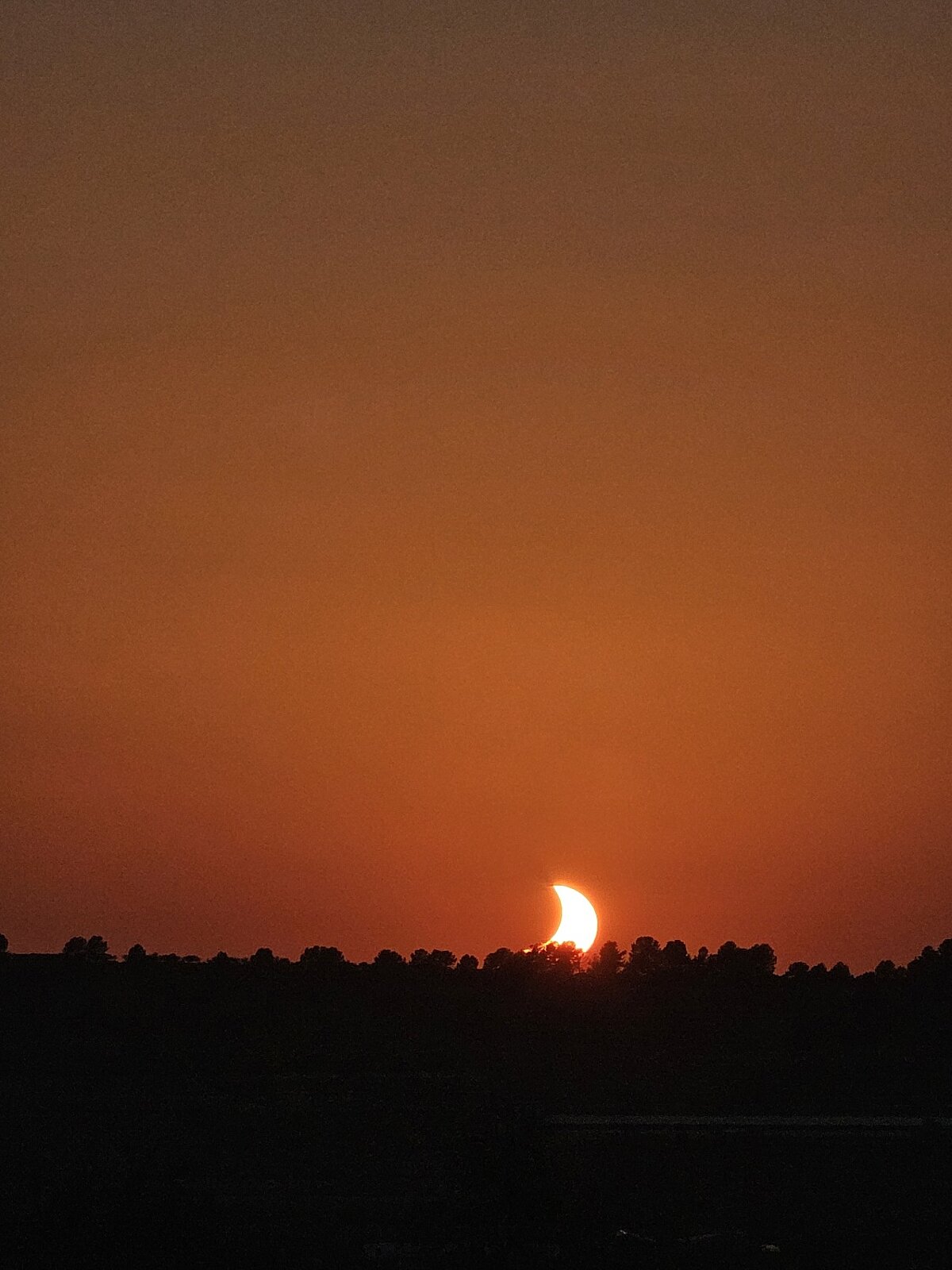
At the Institute of Solid State Physics, University of Latvia (ISSP UL), science is not just a profession – it is a passion and something that connects and inspires even outside of work hours. This was proven very recently when several institute experts travelled to Spain to experience one of nature's most impressive phenomena firsthand – a total solar eclipse.
For scientists whose daily work is closely linked to the study of light and physical processes, this was a unique opportunity to witness the cosmic event in person. We invited them to share their most vivid observations and personal impressions.
Varis Karitāns, Leading Researcher:
“I have wanted to observe a total solar eclipse for a very long time, as astronomical phenomena have always fascinated me deeply. Astronomy is a serious hobby of mine, and I conduct public sky demonstrations at an observatory in Baldone. I believe everyone should see a total solar eclipse at least once in their life, as it looks vastly different from a partial solar eclipse.”
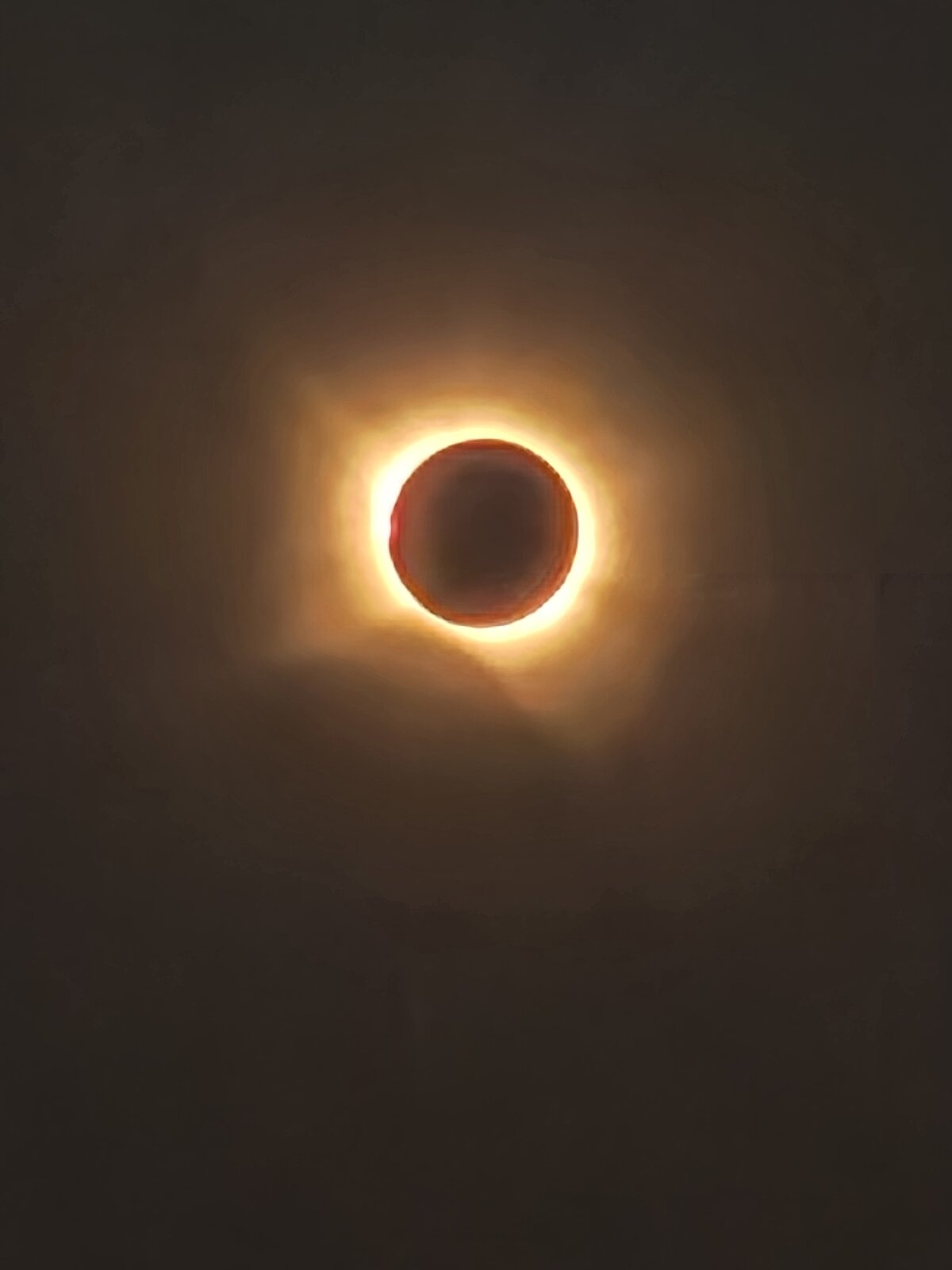
“I observed the total solar eclipse in the coastal town of Valencia. As the climax of the eclipse – the total phase – approached, the dimming of light was noticeable; just a few minutes before totality, a distinct twilight fell over the surroundings. The light began to decrease most rapidly at the moment when 99% of the solar disk was covered. The diamond ring flashed – a bright spot of light visible moments before and after totality – and the Sun transformed into a pitch-black circle surrounded by the solar atmosphere, or corona. You could actually feel the drop in air temperature a bit; as it darkened, I felt a chill on my face, likely because it was a very muggy day (around 33°C), making even the smallest temperature drop noticeable. Moments before the total phase, you could feel the light starting to ‘shimmer’ – rapidly fluctuating slightly darker and lighter until totality began and a deep twilight enveloped everything.”
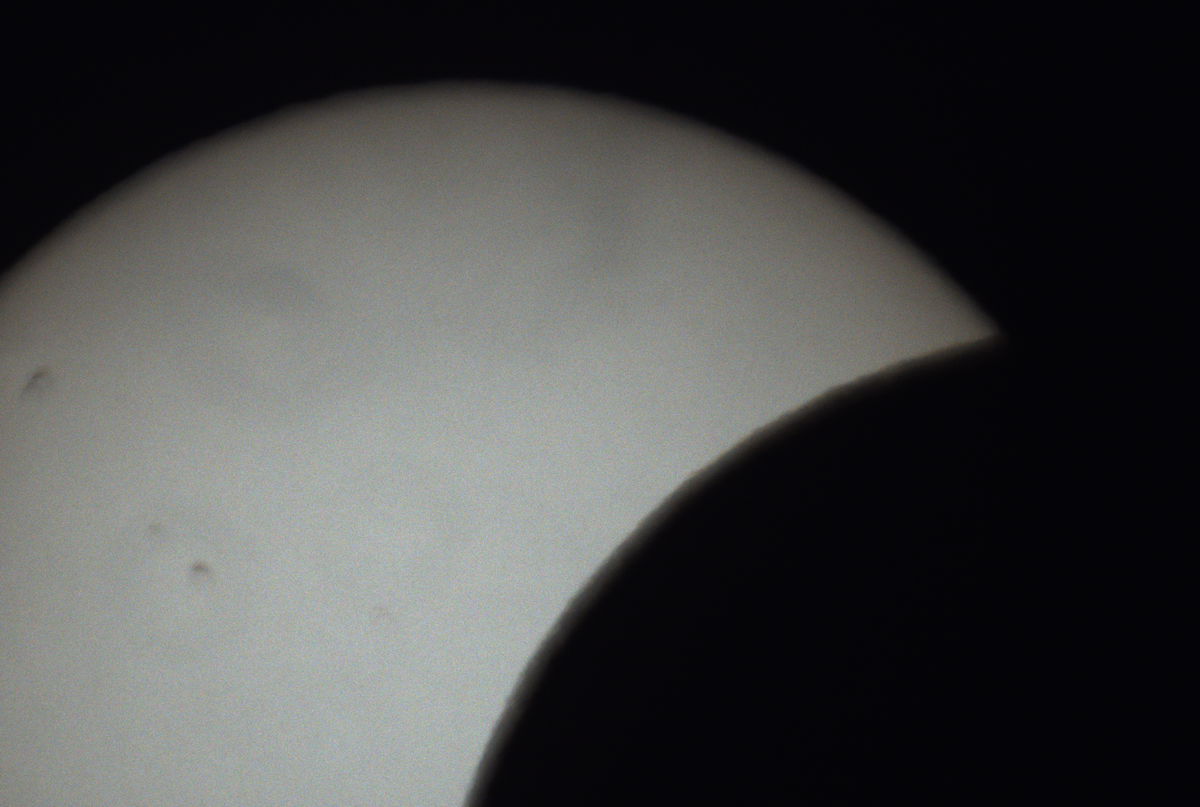
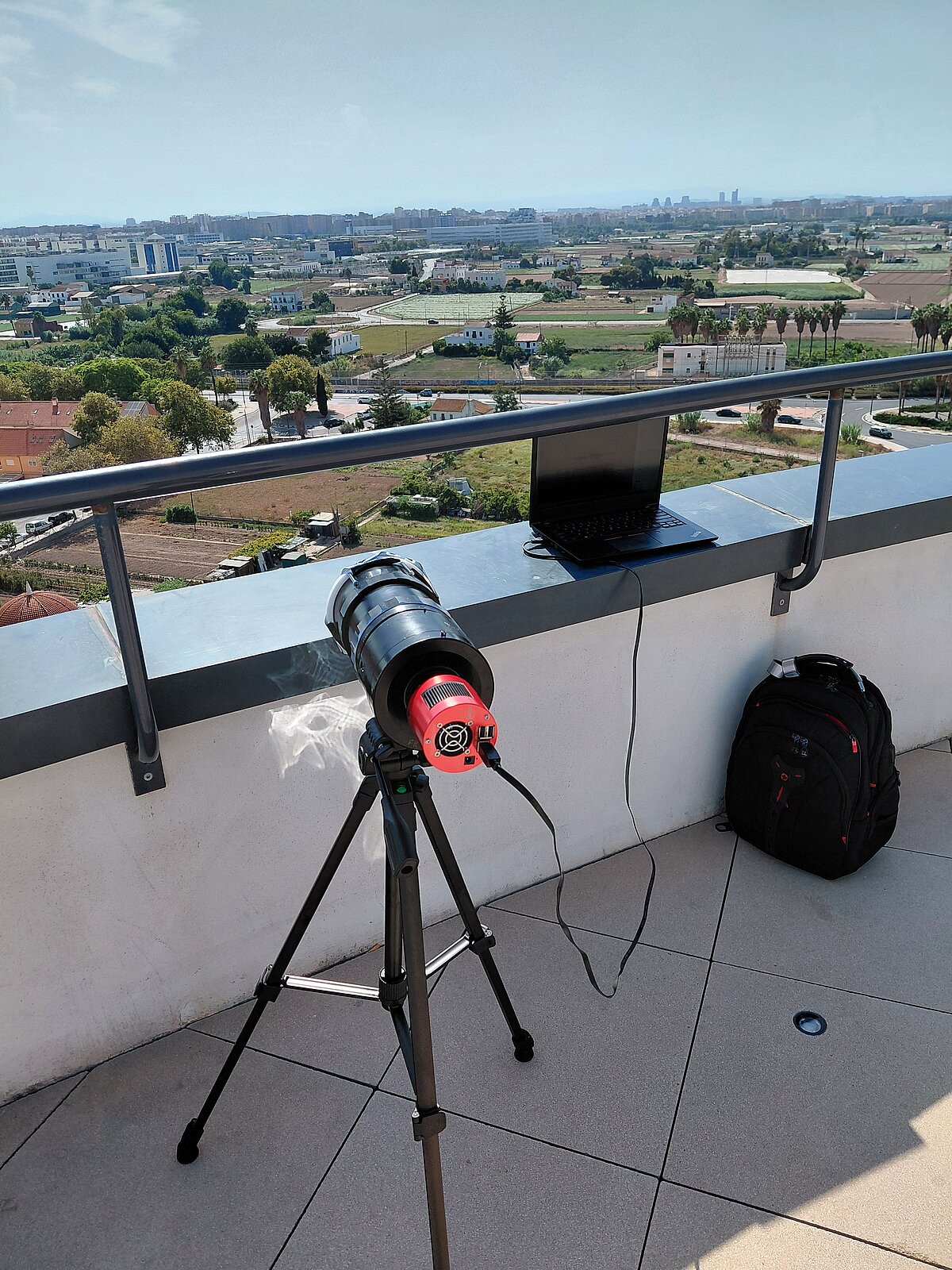
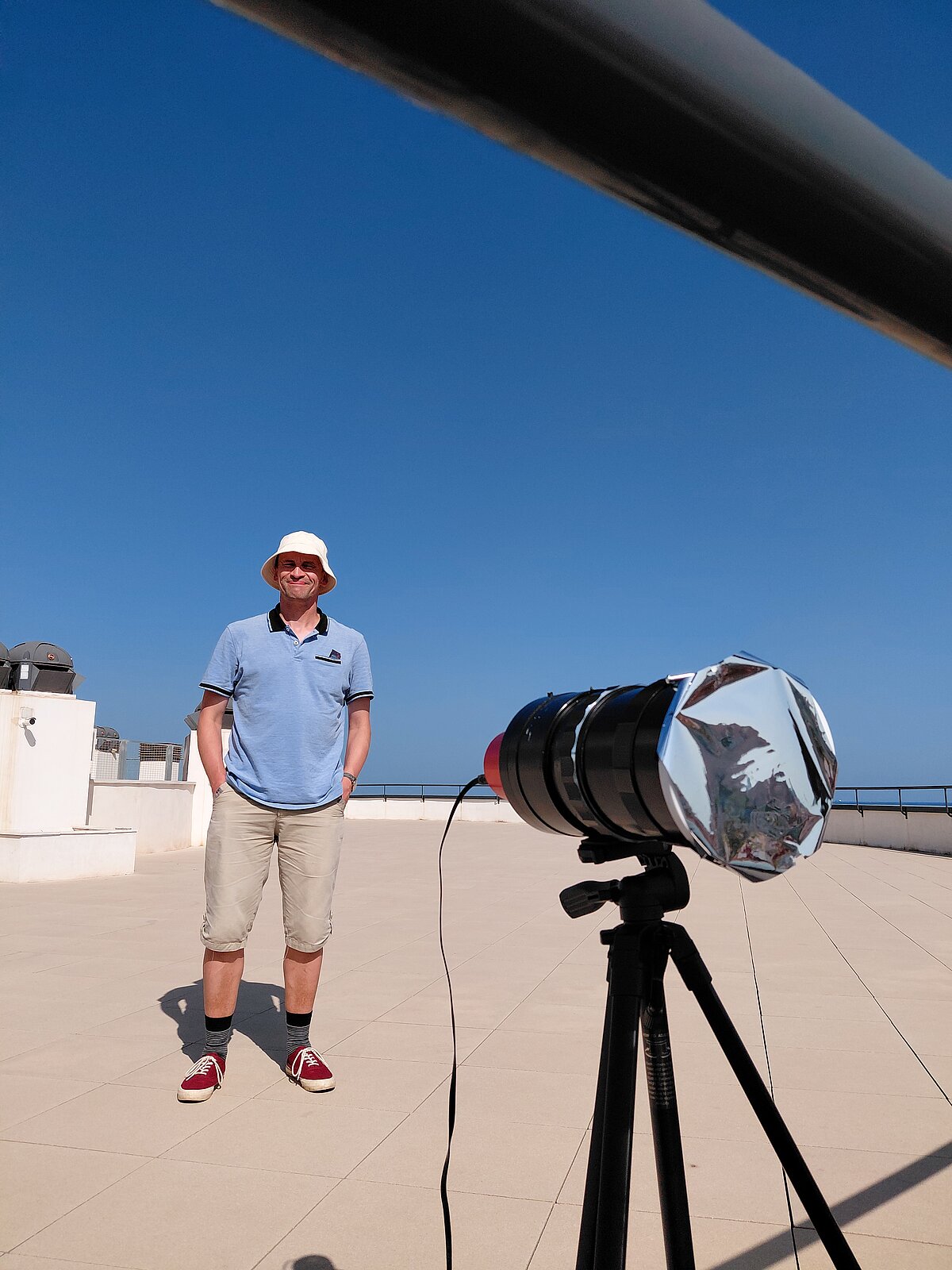
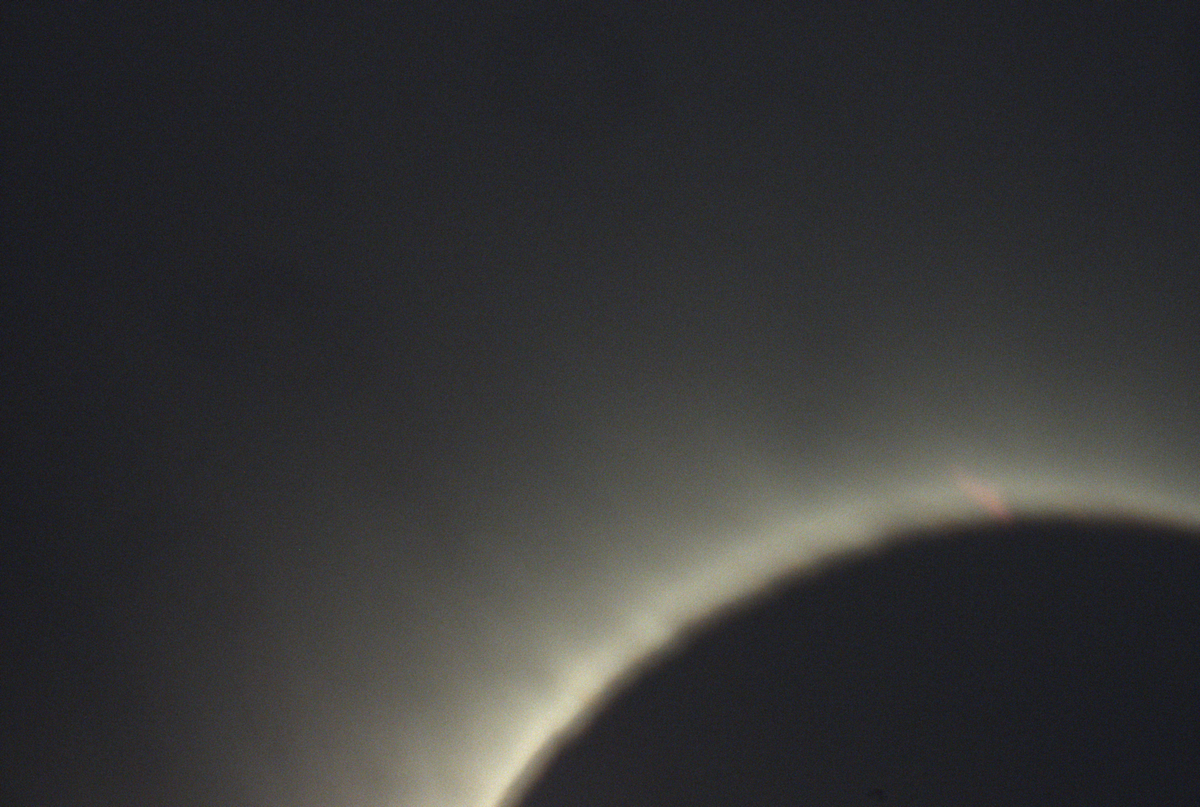
“What surprised me most was the solar corona – it is only visible during totality, even though it is extremely bright. The brightness of the solar atmosphere is comparable to that of a full moon, which is a few million times weaker than the solar disk itself. If you want to photograph it, you must remove the solar filter, otherwise nothing will be visible. I travelled to Valencia with a ZWO ASI 178MC-COOL astrophotography camera and an MTO-1000 telephoto lens. This lens produces massive, high-quality images, but its long focal length means that even the slightest tripod vibrations (such as from wind) degrade image quality. The image of the Sun was too large to fit in the camera's field of view. The shallow depth of field was another challenge to getting a sharp image. Despite these difficulties, I managed to capture several successful close-ups. In my opinion, the most beautiful shot shows part of the fully eclipsed Sun with the solar atmosphere and a prominence visible along its edge.”
“I must say, the feelings that overtake you during a total solar eclipse can only be experienced, not described in words, which is why seeing one at least once in a lifetime is an absolute must. Countless photos are published after every total eclipse, but no words can convey that moment when the Sun swaps its bright disk for one of pitch darkness.”
“I am already planning to travel to Gibraltar next year on August 2 to observe the total solar eclipse, which is already being called the eclipse of the century – the total phase there will last 4 minutes and 30 seconds.”
Edgars Vanags, SEM Service Engineer:
“This was without a doubt the most impressive sight I have ever seen. While the moment of totality itself was breathtaking, what surprised me most were the solar prominences. During totality, they were visible along the edge of the solar disk as distinct, glowing, vivid red structures. I expected to see the corona, but I did not expect the prominences to look so bright and defined to the naked eye. Unfortunately, phone cameras cannot capture these colours or the unique shift in environmental light – in person, it was a true wow moment.”
“I observed the eclipse in the mountains near the village of Aras de los Olmos at a site specifically designated for observers, as natural parks were closed that day due to fire risks. Because the location was far from city lights, I stayed after sunset to enjoy the peak of the Perseid meteor shower under genuinely dark, clear skies. After this experience, I realized one total eclipse wouldn't be enough – I am already planning my next ‘totality hunt’ for 2027, when the total eclipse will last over six minutes depending on the location.”
Rihards Ruska, Research Assistant:
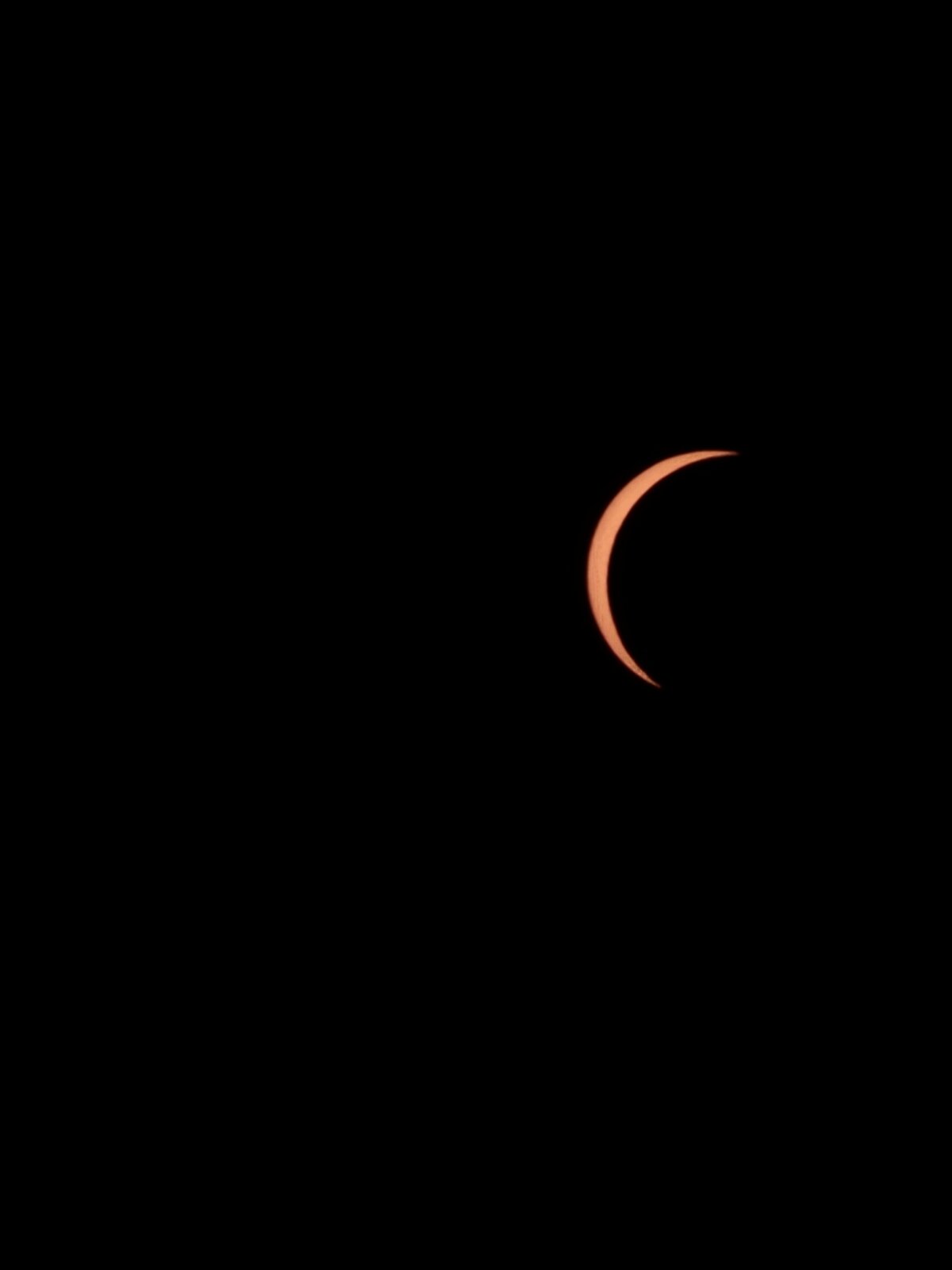
“Me and family went to Valladolid, as historical data promised the lowest probability of cloud cover. We watched the eclipse from a hill overlooking the city, where surprisingly few people were gathered. The Moon's gradual movement across the solar disk began around 19:30 and was visible through eclipse glasses, but a few minutes before totality, rapid changes occurred – the temperature dropped sharply, and the light took on a reddish hue, making it feel as if Earth were lit by a giant incandescent bulb.”
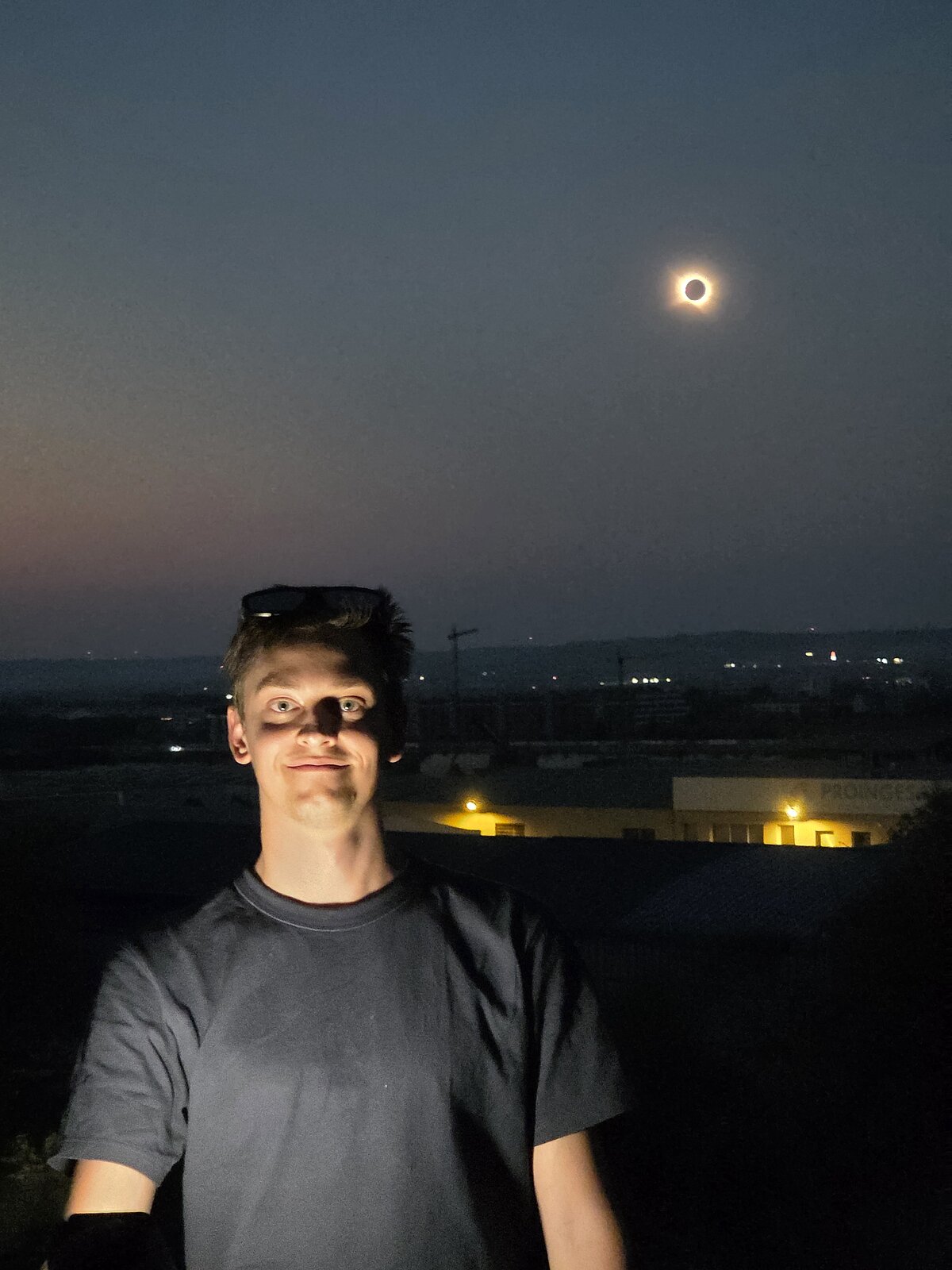
“When darkness suddenly fell and the Sun was completely hidden behind the Moon, everyone took off their glasses. The sight resembled a giant, yellow-glowing cat's eye looking straight down at Earth. The city's night lights turned on, and although totality lasted only 1 minute and 28 seconds at our location, time flew by in an instant. Just as suddenly as the darkness arrived, it receded – as if someone had switched the lights back on. Driving home, we looked at the Sun through our glasses for a long time and recounted what we had seen. It is definitely one of the highlights of my life.”
