Lithium-ion batteries have long ceased to be just about smartphones or electric vehicles. Today, they are becoming a critical element in large-scale energy storage systems that help ensure the stable and efficient use of solar and wind energy. However, these systems have a weak point – inevitable aging.
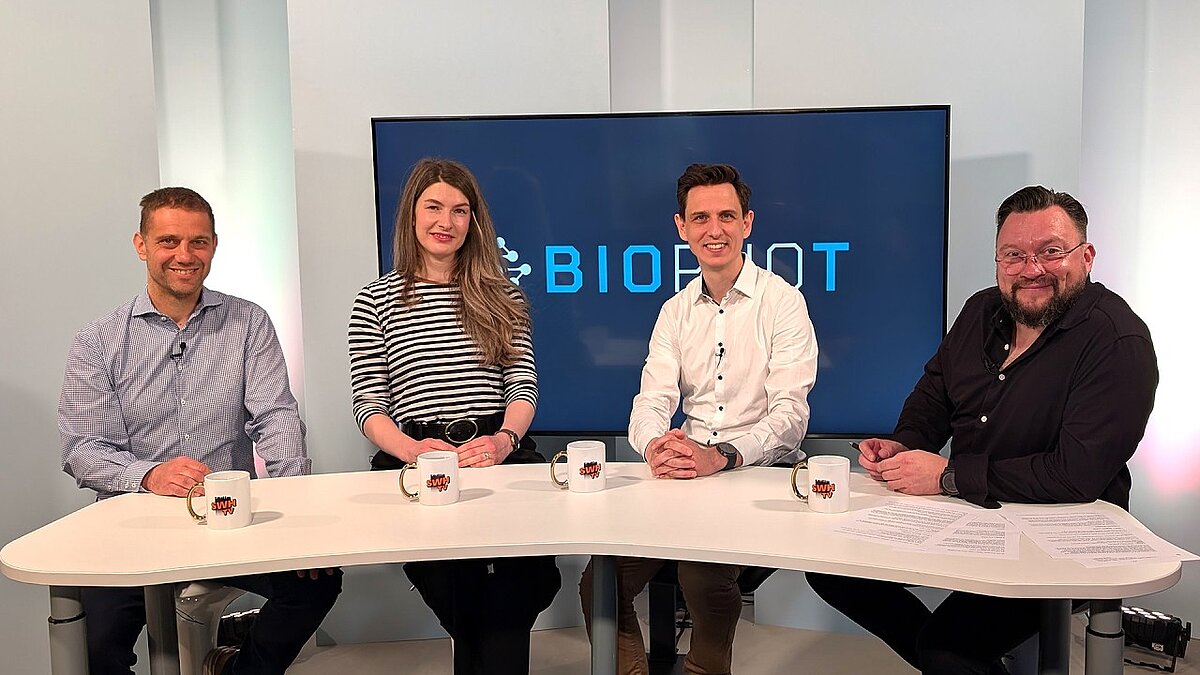
In the latest episode of the Radio SWH show "Latvija zinātnē" (Latvia in Science), the discussion on extending battery life and science commercialization features Gints Kučinskis, Leading Researcher and Head of the Laboratory of Energy Materials at the Institute of Solid State Physics, University of Latvia (ISSP UL), Voldemārs Brēdiķis, mentor at "BioPhoT", and Arta Zitmane, business developer.
The global demand for efficient energy storage systems is growing exponentially. Consequently, there is an increasing need for ways to make batteries more durable and economically viable. Gints Kučinskis, who has focused on lithium-ion battery research since his student days, emphasizes that while aging is a natural process, it can be significantly slowed down.
The main "enemy" of batteries is inappropriate temperature, but usage habits and charging regimes also play a massive role. The team led by Kučinskis at ISSP UL is currently working on developing a smart algorithm that will allow these operating conditions to be monitored and adjusted in real time.
"We understand how batteries age quickly or slowly under different conditions, but, hey, we can actually adjust those conditions to make the batteries last longer," says Gints Kučinskis.
A scientific discovery in the laboratory is only the first step. For an idea to transform into a product in demand on the market, a bridge between science and business is required. At this stage, the team is supported by the "BioPhoT" platform.
As Voldemārs Brēdiķis and Arta Zitmane point out, scientists and entrepreneurs often view the same problem differently: researchers focus on the nuances of the technology, while entrepreneurs focus on the real needs of the market.
Interestingly, the ISSP UL team has chosen to develop a software solution (an algorithm) rather than a new physical battery cell. Arta Zitmane explains that the greatest business advantage of an algorithm is its flexibility – it is much easier and faster to demonstrate to clients and adapt to various industry needs compared to hardware, which is expensive to manufacture.
Although Latvia does not have its own lithium deposits, this does not prevent us from being significant players in the global battery industry. Our main value lies in knowledge and the ability to create smart technological solutions.
The current focus of the ISSP UL team is on Battery Energy Storage Systems (BESS), which are used in renewable energy projects. Unlike consumer electronics, where replacing a battery is not as critical, in large solar and wind farms, every additional year of operation directly impacts the return on investments worth millions of euros. It is precisely in this segment that the algorithm developed by Latvian scientists can deliver the greatest economic impact.