
For science institutions, it’s important to communicate about our progress to audiences outside of the scientific community. A few such cases can be spotted in this year's printings of the Latvian magazine "Mājas Viesis" where Institute of Solid State Physics, University of Latvia (ISSP UL) researchers gave insights to their current projects and what they aim to achieve.
In the April issue of the magazine, Leading Researcher at the Spectroscopy Laboratory Vladimirs Pankratovs, talks about developing scientific methods to extract precious metals from electronics waste.
He explains how instead of primitively removing the valuable components by hand, this approach utilises spectroscopy to identify and separate the metals like gold, platinum, and palladium from grinded up electronics. The next steps include improving the extraction process so that the reclaimed materials can be circled back into manufacturing new devices.
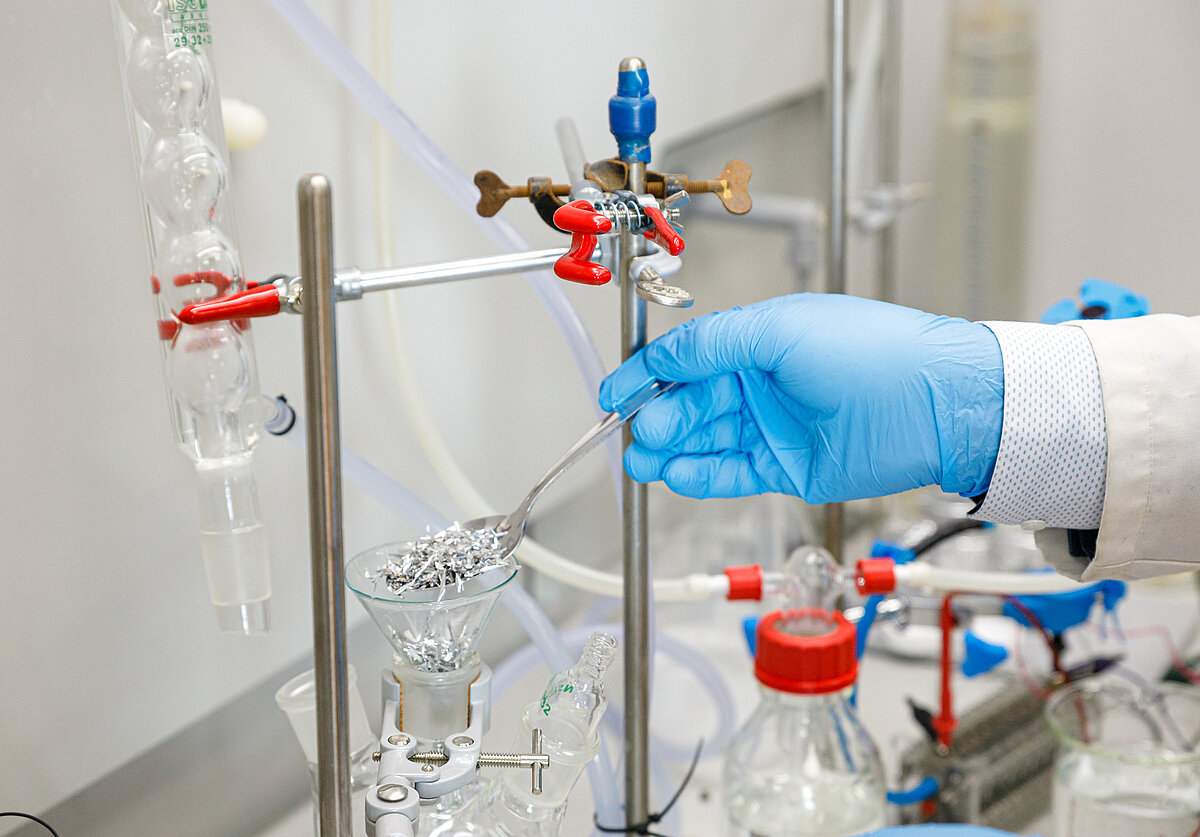
In the December issue, Ainārs Knoks, Leading Researcher at the Energy Materials Laboratory, was interviewed about a new project that focuses on developing methods for capturing and beneficially using carbon dioxide through the use of aluminium waste and water.
Knoks explains how the idea for the project emerged over the course of earlier scientific research where they investigated aluminium reactions with water and the resulting release of hydrogen and heat.
He also highlights a key scientific observation: aluminium hydroxide’s ability to bind the carbon dioxide in the surrounding environment, forming carbonates. This finding opens up new opportunities for the development of environmentally friendly technologies that combine the reuse of industrial waste with the reduction of greenhouse gas emissions.
