
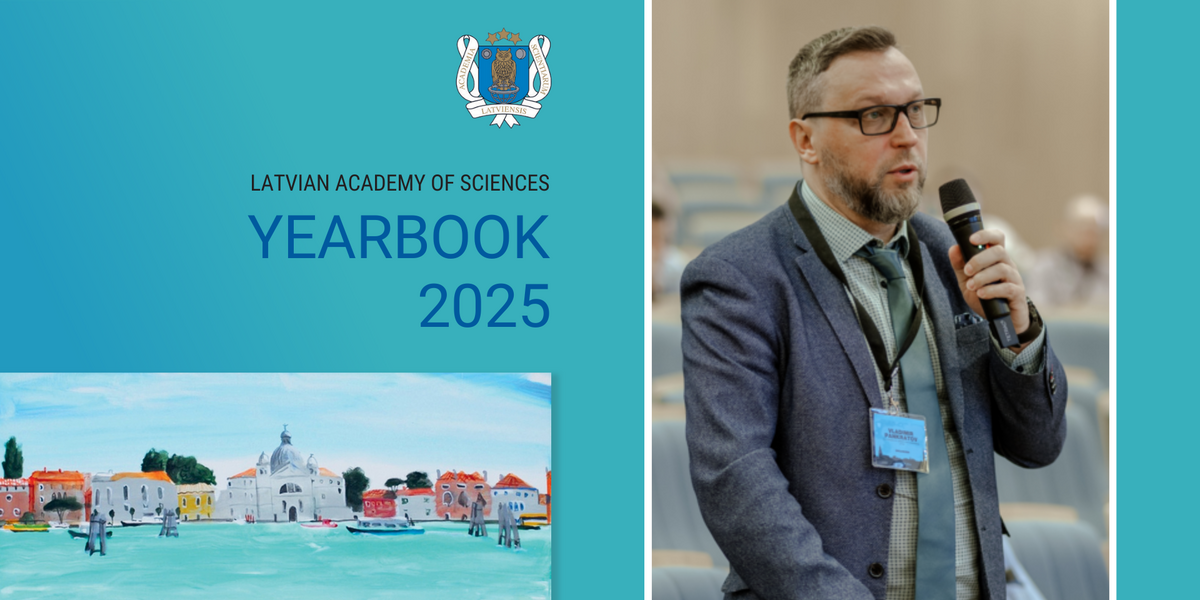
The Latvian Academy of Sciences has released its annual yearbook — a comprehensive overview of achievements, challenges, and future outlooks across Latvia’s scientific landscape. The publication brings together insights from leading experts and institutional heads representing diverse fields of research. Among the contributors is Institute of Solid State Physics, University of Latvia (ISSP UL) leading researcher Vladimirs Pankratovs who explains the importance of recovering precious metals from wasted electronics. Here we share a brief excerpt from the article.
The most commonly recovered precious metals from electronic waste are gold (Au), silver (Ag), and palladium (Pd). In some cases, platinum (Pt) is also mentioned. These metals are particularly valuable due to their high market prices, chemical stability, electrical conductivity, and wide application in the electronics, automotive, and jewellery industries.
Both traditional and newer, more environmentally friendly technologies are used for precious metals recovery. Traditional methods such as pyrometallurgy, cyanide leaching, and the use of halogens provide a certain level of efficiency but are often associated with high energy consumption, hazardous emissions, and significant costs.
Pyrometallurgy, or smelting, is a commercially dominant method; however, its drawbacks include high energy consumption, low selectivity, and release of toxic substances. Cyanide-based methods are effective but highly toxic and cause considerable pollution. The use of halogens (chlorine, bromine, iodine) also presents risks because it requires specialised equipment and there is a potential for dangerous leaks. Alternative reagents, such as thiosulfate or thiocarbamide, are less harmful to the environment but less effective and involve more complex process control.
On the other hand, newer technologies offer significant advantages. Hydrometallurgy allows selective leaching of metals from solid fractions and their separation from solutions using ion exchange or extraction methods. Biometallurgy employs microorganisms for metal recovery, reducing energy consumption, although the process is slow.
A particularly promising method is electrochemical hydrochlorination with alternating current, where chlorine is generated in situ in a single reactor, thus avoiding the need for chlorine production, transportation, and storage. This method is environmentally safe, energy-efficient, and provides a high degree of metal recovery, for example: gold up to 86.3%, copper up to 95.2%, and silver up to 100%.
The author continues by outlining how these novel methods can impact the global market and resource sustainability, as well as how Latvia is contributing to technology development in this field.
Read the full article in the Latvian Academy of Sciences Yearbook 2025
